The Rise of Data Center Heists
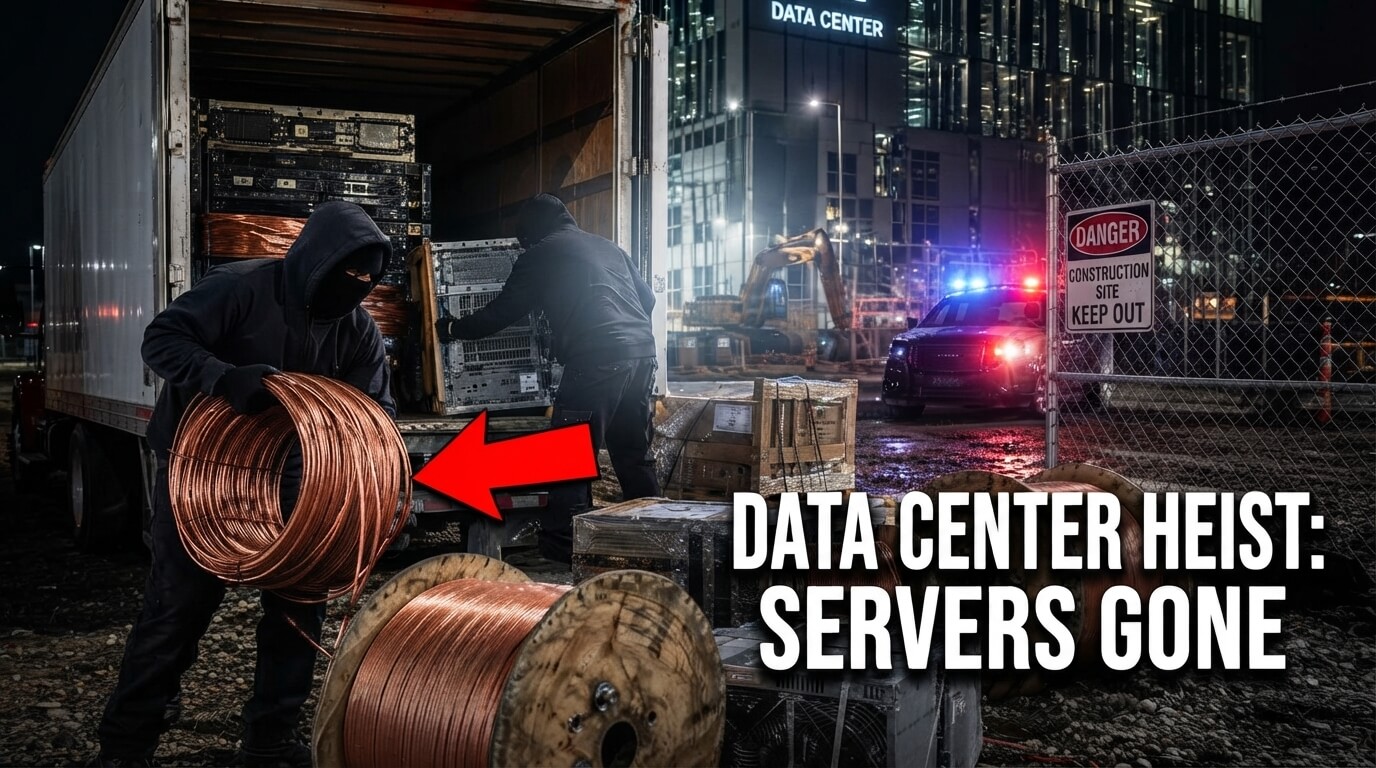
Thieves are hitting the supply chains that power the AI revolution. In one recent case, authorities recovered two trailers worth $1.3 million in data center gear near Chicago—one loaded with $300,000 worth of copper wire stolen from Alabama, the other carrying about $1 million in infrastructure equipment taken from Florida.
These aren’t random smash-and-grabs. Organized rings are targeting shipments of copper cables, heavy wiring, servers, and cooling systems before they ever reach construction sites. The AI boom has created a perfect storm: massive demand for specialized materials, constant movement of high-value cargo across highways, and resale markets hungry for quick cash.
Why AI Data Centers Have Become Prime Targets
The explosion in artificial intelligence has triggered an unprecedented buildout of data centers across the United States. Companies need enormous facilities packed with servers that require miles of copper wiring for power and data transmission, sophisticated cooling systems, and racks of expensive hardware. Copper, in particular, has seen its value surge because of this demand.
Thieves know exactly what to look for. Copper wire can be stripped and sold quickly on the black market. Servers and related equipment fetch high prices from unscrupulous buyers. A single trailer can carry hundreds of thousands of dollars in easily movable goods.
Cargo theft overall cost businesses around $725 million in 2025, according to Verisk CargoNet data, with the average value per incident climbing. Early 2026 figures already show hundreds of incidents totaling over $130 million in stolen goods. The AI infrastructure wave is carving out a lucrative new niche in this underground economy.
A Coordinated Operation Unfolds
In the Illinois case that made headlines recently, investigators from the Cook County Sheriff’s Office got a tip about a suspicious trailer at a truck yard in Elk Grove Township. Inside, they found massive spools of copper wire reported stolen from Pine Hill, Alabama. The truck yard owner mentioned another delivery a week earlier—another stolen trailer with roughly $1 million in data center equipment from Jacksonville, Florida.
One trailer even had swapped license plates, a classic move to throw off tracking. GPS on the copper load ultimately helped authorities locate it. These details point to professional crews who understand logistics, monitor shipments, and move goods across state lines fast.
Similar stories are emerging elsewhere. Reports mention another incident involving nearly $5 million in copper and electronics vanishing in transit. Construction sites themselves also face risks, though shipments on the road appear especially vulnerable because they’re in motion and sometimes less guarded.
The Broader Impact on the AI Boom
Delays from thefts ripple outward. Data center projects already wrestle with tight timelines, supply chain pressures, and enormous costs. Every stolen load means reordered materials, insurance claims, and potential setbacks in bringing new AI capacity online. For companies racing to meet the demands of training ever-larger models, these interruptions carry real financial and competitive weight.
Beyond immediate losses, the thefts expose vulnerabilities in how critical infrastructure gets built. Data centers support everything from cloud computing to scientific research and national security applications. When supply chains feeding them become unreliable, it indirectly affects innovation pace and economic growth tied to AI.
Copper theft isn’t entirely new—telecom companies like AT&T have reported thousands of incidents over the years—but the scale and targeting of AI-specific builds feel different. The sheer volume of material moving right now creates more opportunity than ever before.
How Thieves Operate and Why It Works
Organized groups treat cargo theft like a business. They scout routes, use insiders or technology to identify high-value loads, strike quickly—sometimes with hijackings or lot thefts—and move merchandise through chop shops or export channels. Copper is particularly attractive because it’s fungible: melt it down or sell it to scrap dealers, and the trail goes cold.
Data center equipment requires a bit more sophistication to fence, but demand from secondary markets or overseas buyers keeps the cycle going. The $35 billion annual estimate from the Department of Homeland Security for cargo theft nationwide shows this isn’t a small-time problem.
Security Responses and Challenges
Data center operators and logistics companies are ramping up protections. GPS tracking, convoy systems, enhanced yard security, and better coordination with law enforcement all help. Some projects now use private security for sensitive shipments or choose routes and timing strategically.
Yet the challenges remain formidable. The United States has vast highway networks and thousands of truck yards. Fully securing every link in the supply chain is expensive and complex. Insurance covers some losses, but premiums rise, and delays still hurt.
Experts emphasize layering physical security with intelligence sharing. Industry groups and police task forces focused on organized retail and cargo crime are seeing increased activity around data center materials. Public-private partnerships could prove key as the boom continues.
What This Means for the Future
The AI buildout isn’t slowing. Projections show continued massive investment in data centers for years to come. As long as copper and specialized hardware remain expensive and in high demand, thieves will keep testing defenses.
This creates a feedback loop: higher security costs get passed along, potentially slowing projects or raising the overall price of AI development. On the positive side, the attention on these heists may drive innovation in supply chain tracking, smarter materials, or even alternatives to traditional copper in some applications.
For now, the incidents serve as a reminder that the physical world still matters even in the high-tech AI era. Servers may live in the cloud, but the cables, racks, and cooling systems that make them run travel on very real roads—where criminals are watching closely.
The $1.3 million recovery near Chicago is just one visible success in what appears to be a growing pattern. Law enforcement and industry will need to stay ahead of increasingly sophisticated rings if the AI infrastructure push is to stay on track. In the race to build the future, protecting the building blocks has become an unexpected but critical front.
The story of data center heists highlights how quickly new technologies reshape not just innovation landscapes but also old-fashioned crime patterns. As long as the boom continues, so will the need for vigilance on the ground.