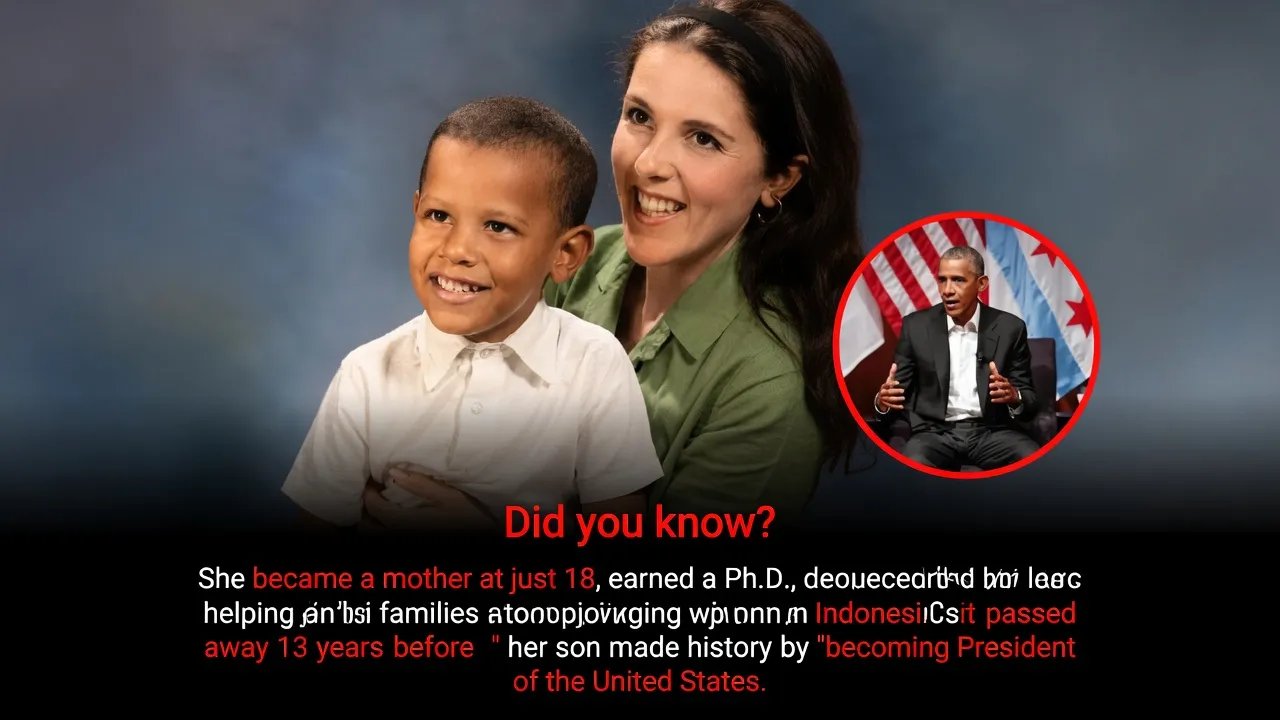
History often remembers presidents for their speeches, policies, and milestones. Yet behind many influential leaders stands someone whose impact is less visible but equally profound. In the case of Barack Obama, that person was his mother, Ann Dunham. Long before Obama became the first African American President of the United States in 2008, Ann Dunham had already built a life defined by curiosity, resilience, and a commitment to helping others.
Her story is not simply about raising a future president. It is about a young woman who challenged expectations, pursued education against the odds, and spent much of her life working to improve opportunities for families living in poverty.
A Young Mother With Big Dreams
Ann Dunham became a mother at just 18 years old after giving birth to Barack Obama in Honolulu, Hawaii, in 1961. Becoming a parent at such a young age could have limited her ambitions, but she refused to let it define her future.
Instead, she continued her education while balancing the responsibilities of raising a child. Those early years required determination, especially during a period when young single mothers often faced significant social and economic challenges.
Rather than giving up on her goals, Ann believed education could create opportunities—not only for herself but also for her son.
A Passion for Learning and Understanding Cultures
Education remained at the center of Ann Dunham’s life. She later earned a Ph.D. in anthropology from the University of Hawaii, focusing her research on rural development and traditional craftsmanship.
Anthropology allowed her to study how communities lived, worked, and solved everyday problems. Instead of limiting her work to academic theory, she wanted her research to produce practical benefits for real people.
Her interest in different cultures eventually led her to spend many years living and working in Indonesia.
Building Better Lives in Indonesia
While living in Indonesia, Ann dedicated much of her career to helping low-income families improve their economic opportunities.
She worked on projects related to rural development and microfinance, supporting programs that helped small business owners, artisans, and women gain greater financial independence.
Much of her work focused on empowering women because she believed stronger families often began with stronger opportunities for mothers. By improving access to education, small loans, and community resources, these initiatives aimed to create lasting economic stability.
Her work reflected a simple but powerful belief: lasting change begins by giving people the tools to improve their own lives.
The Values She Passed On to Barack Obama
Although Barack Obama experienced life in different countries and family circumstances during childhood, his mother’s influence remained constant.
Ann encouraged him to ask questions, read widely, respect different cultures, and approach people with empathy. She emphasized that education was more than earning good grades—it was a lifelong way of understanding the world.
Obama has spoken on numerous occasions about how his mother instilled values of compassion, responsibility, and public service. Those lessons later became visible throughout his political career, where themes of unity, opportunity, and civic responsibility frequently appeared.
A Mother Who Never Saw History Made
One of the most heartbreaking parts of Ann Dunham’s story is that she did not live to witness her son’s greatest achievement.
She died in November 1995 at the age of 52 after battling ovarian and uterine cancer.
Thirteen years later, in November 2008, Barack Obama won the U.S. presidential election, becoming the nation’s first African American president—a historic milestone celebrated around the world.
Many have reflected on how meaningful it would have been for Ann to witness that moment after years of encouraging her son’s education and personal growth.
More Than the Mother of a President
It would be easy to remember Ann Dunham only because she raised Barack Obama, but doing so overlooks her own remarkable accomplishments.
She was a respected anthropologist, researcher, and development specialist whose work focused on reducing poverty and expanding economic opportunities.
Her contributions in Indonesia and other developing communities earned respect among scholars and development professionals who recognized her practical, people-centered approach.
In many ways, her legacy extends beyond politics into education, international development, and women’s empowerment.
Why Her Story Still Resonates Today
Ann Dunham’s life continues to inspire because it reflects themes that remain relevant across generations.
Her story highlights the power of perseverance, lifelong learning, and compassion. It also demonstrates how parents and mentors can influence future leaders through everyday lessons rather than public recognition.
For many readers, her journey serves as a reminder that meaningful leadership often begins long before someone enters public office. It begins at home—with values, encouragement, and the belief that knowledge can create positive change.
The Lasting Legacy of Ann Dunham
When people discuss Barack Obama’s historic presidency, conversations naturally focus on elections, policy decisions, and political achievements. Yet understanding his story also means understanding the woman who helped shape his worldview.
Ann Dunham overcame challenges that could have discouraged many people. She pursued higher education, dedicated herself to helping disadvantaged communities, and taught her son to value empathy alongside ambition.
Although she never witnessed Barack Obama’s rise to the White House, her influence remained deeply woven into the values he carried throughout his life.
Behind one of history’s most recognizable leaders stood a mother whose quiet determination, intellectual curiosity, and unwavering belief in education continue to leave a lasting mark. Ann Dunham’s legacy reminds us that the people who change the world are often first shaped by someone whose own story deserves to be remembered.