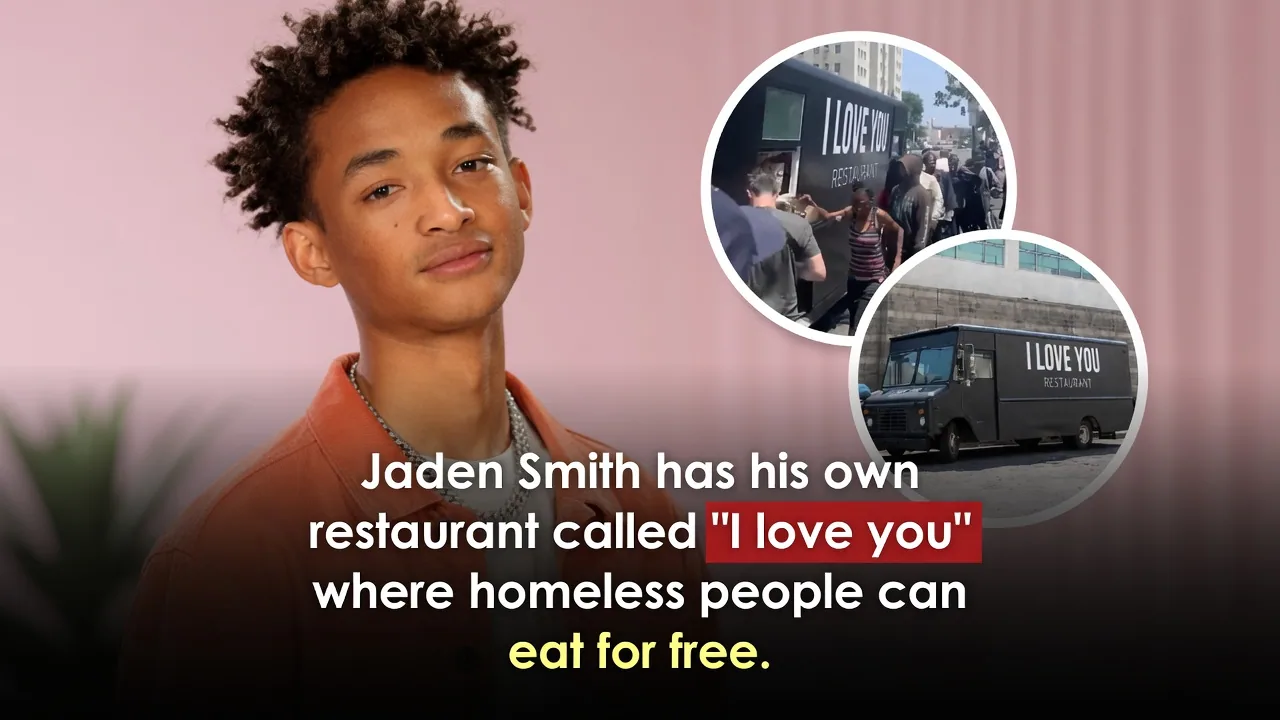
While many celebrity projects focus on entertainment or business, Jaden Smith chose a different path. His initiative, “I Love You,” was created with a simple but powerful purpose: providing free, healthy meals to people experiencing homelessness and food insecurity.
Launched in 2019, the project is not a traditional restaurant where everyone pays for a meal. Instead, it operates as a community-focused food initiative that serves nutritious vegan food at no cost to those who need it most. The idea combines social impact with dignity, showing that access to healthy food should not depend on someone’s financial situation.
As conversations about food insecurity continue around the world, Jaden Smith’s initiative remains an example of how creative thinking and community partnerships can make a meaningful difference.
What Is Jaden Smith’s “I Love You” Restaurant?
Despite often being called a restaurant, “I Love You” is better described as a charitable food initiative. It began in Los Angeles with the goal of making healthy vegan meals available to people facing homelessness.
The project initially launched as a food truck, allowing volunteers and organizers to bring meals directly to communities rather than expecting people to travel to a fixed location. This mobile approach helped reach individuals who often have limited access to nutritious food.
Unlike many food assistance programs that rely mainly on donated canned goods, “I Love You” focuses on fresh, plant-based meals prepared with nutrition in mind.
Why Jaden Smith Started the Initiative
Jaden Smith has long spoken about environmental issues, sustainability, and social responsibility. His interest in healthy eating naturally connected with concerns about hunger and unequal access to nutritious food.
Rather than simply donating money, he wanted to build a model that addressed both nutrition and dignity.
The name “I Love You” reflects that philosophy. It sends a message that everyone deserves respect, kindness, and access to wholesome food regardless of their circumstances.
By combining compassion with practical action, the initiative encourages communities to see food assistance as more than charity—it becomes an act of human connection.
How the Program Works
One of the most innovative aspects of the project is its funding model.
People experiencing homelessness receive meals completely free of charge. Paying customers and partnerships with organizations help support the operation, creating a system where purchases contribute to feeding others.
This approach allows the initiative to balance social impact with long-term sustainability rather than depending entirely on donations.
The meals are prepared with an emphasis on fresh ingredients and balanced nutrition, offering healthier alternatives than the processed foods that are often more accessible to vulnerable populations.
Why Healthy Food Matters
Food insecurity is about more than simply having enough to eat.
Many people facing homelessness have limited access to nutritious meals, increasing the risk of health problems such as diabetes, heart disease, and high blood pressure.
Providing vegetables, grains, legumes, and other nutrient-rich ingredients helps support better physical health while also demonstrating that everyone deserves quality food.
Nutrition experts frequently point out that healthy eating can improve energy levels, strengthen the immune system, and support overall well-being. Initiatives like “I Love You” aim to make those benefits available to people who often have the fewest choices.
Community Partnerships Help Expand the Mission
No single organization can solve food insecurity alone.
The success of “I Love You” relies on collaboration with local partners, volunteers, suppliers, and supporters who share the same vision.
These partnerships help secure ingredients, organize meal distribution, and reach neighborhoods where assistance is most needed.
Community involvement also encourages more people to participate, whether through volunteering, supporting local food programs, or raising awareness about hunger in their own cities.
Public Response to the Project
Since its launch, Jaden Smith’s initiative has received widespread attention from both fans and charitable organizations.
Many people praised the project for focusing on practical solutions instead of publicity. Supporters highlighted that the initiative treats recipients with dignity while promoting healthier food options.
The project has also inspired conversations about how celebrities can use their influence to support long-term community programs rather than one-time charitable events.
Although no single program can eliminate homelessness or hunger, many observers view “I Love You” as an example of how public figures can encourage positive social change.
A Different Kind of Celebrity Philanthropy
Celebrity charity work often involves fundraising campaigns or financial donations.
Jaden Smith chose a more hands-on approach by supporting a food initiative that directly serves meals to people in need.
This practical model demonstrates that philanthropy can involve building sustainable systems rather than only responding to emergencies.
By focusing on nutrition, accessibility, and respect, the project stands apart from many traditional food donation efforts.
The Bigger Conversation About Food Insecurity
According to organizations working to reduce hunger, millions of people continue to experience food insecurity, even in wealthy countries.
Limited income, rising living costs, unemployment, and housing instability all contribute to the problem.
Projects like “I Love You” cannot solve these complex issues on their own, but they highlight the importance of community-based solutions that complement public assistance programs and nonprofit organizations.
They also remind people that addressing hunger involves both providing meals and ensuring those meals support long-term health.
Final Thoughts
Jaden Smith’s “I Love You” restaurant initiative is about far more than serving vegan food. It represents a commitment to helping people experiencing homelessness receive nutritious meals with dignity and respect.
Since launching in 2019, the project has shown how thoughtful partnerships, sustainable funding, and community support can work together to fight food insecurity. While the challenge of hunger remains significant, initiatives like this demonstrate that meaningful change often begins with a simple idea: treating every person with compassion and ensuring that healthy food is accessible to those who need it most.