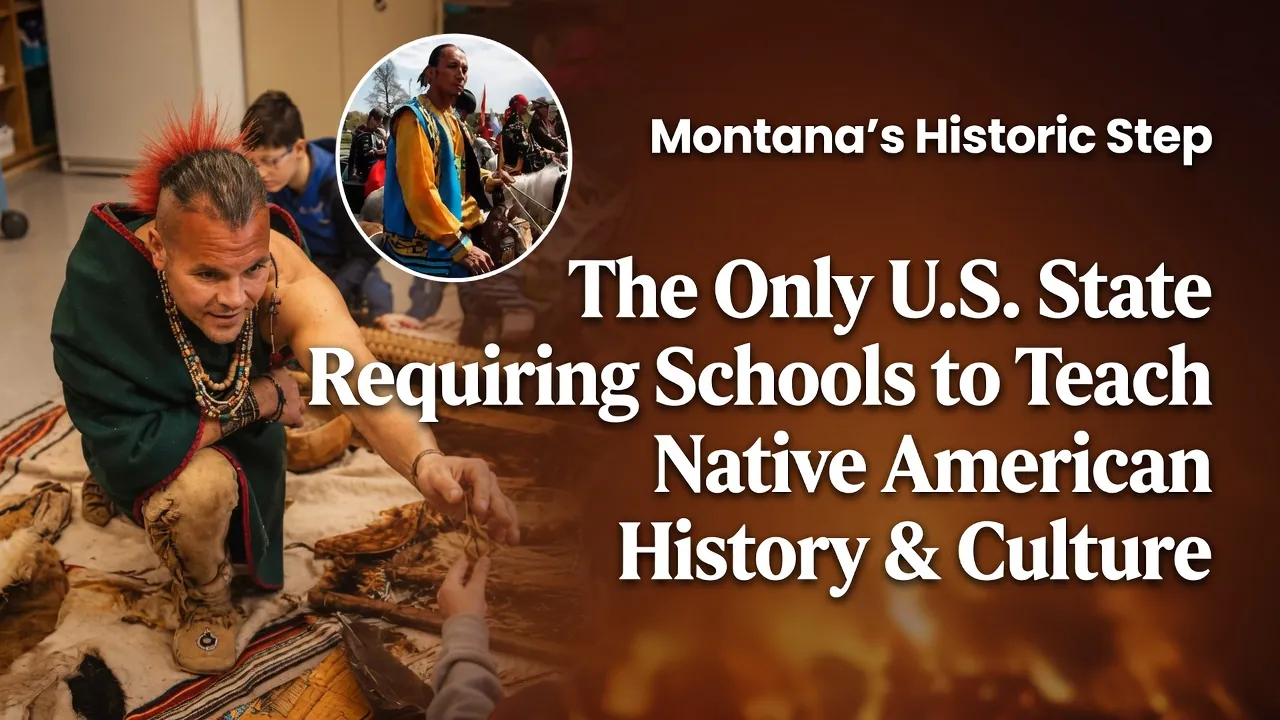
In a classroom in Montana, students sit quietly as a Native American educator kneels on a traditional blanket, carefully placing cultural artifacts in front of them. Stories that were once overlooked in many American classrooms come alive through personal experiences, language, history, and tradition. For these children, Native American history is not a brief chapter in a textbook—it is an essential part of their education.
This powerful learning experience exists because Montana requires every public school to teach Native American history and culture. The law has transformed classrooms across the state, helping students understand the lives, traditions, and contributions of Indigenous communities while encouraging respect and cultural awareness.
Montana’s Groundbreaking Education Law
Montana stands apart from every other U.S. state thanks to its commitment to Indigenous education. The state’s Indian Education for All (IEFA) law requires all public schools to include accurate and meaningful instruction about Native American history, culture, and contemporary life.
The law is rooted in Montana’s Constitution, which recognizes the unique cultural heritage of Native Americans and calls for preserving that heritage through education. While many states encourage lessons about Indigenous peoples, Montana is the only state that legally requires this education for every student.
The goal extends far beyond teaching historical events. Students learn about living cultures, tribal governments, languages, traditions, and the lasting impact Native American communities continue to have on the state and the nation.
More Than History Lessons
The classroom scene described in many Montana schools reflects a different way of learning.
Instead of relying only on textbooks, educators often invite tribal elders, historians, artists, and cultural educators to share firsthand knowledge. Students may examine traditional tools, hear tribal stories, learn about local customs, or participate in discussions about the importance of preserving cultural identity.
These experiences help students connect emotionally with history rather than simply memorizing dates and facts.
For Native American children, seeing their cultures represented respectfully in school can strengthen confidence and pride in their heritage. For non-Native students, the lessons offer opportunities to challenge stereotypes and develop a deeper understanding of America’s first peoples.
Why This Education Matters
For generations, Native American history was often presented incompletely or inaccurately in many schools across the United States. Important stories were minimized, while the perspectives of Indigenous communities were frequently left out.
Montana’s approach attempts to change that.
Students learn that Native American history did not end centuries ago. Indigenous nations continue to thrive, govern their communities, protect cultural traditions, and contribute to modern society in countless ways.
The curriculum also explores difficult chapters in American history, including displacement, broken treaties, boarding schools, and cultural suppression. Presenting these subjects honestly helps students understand the challenges Native communities have faced while recognizing their resilience and continued strength.
Learning From Those Who Lived the Story
One of the most meaningful aspects of Montana’s program is the involvement of Native voices.
Rather than teaching Indigenous history only through outside interpretations, many schools collaborate directly with tribal members and educators. Personal stories, traditional knowledge, and community perspectives make lessons richer and more authentic.
A cultural educator sharing family experiences or demonstrating traditional crafts often leaves a stronger impression than a textbook paragraph ever could.
Students not only gain historical knowledge but also learn the importance of listening to people whose voices have too often been ignored.
Building Respect Across Communities
Education has the power to reduce misunderstanding.
When children learn about Native American traditions, beliefs, and histories from an early age, they are more likely to develop empathy and respect for cultures different from their own.
Teachers across Montana have reported that culturally inclusive lessons often lead to thoughtful classroom discussions about fairness, identity, and community. Students become more comfortable asking respectful questions and exploring perspectives they may never have encountered before.
These conversations help build stronger relationships between schools and tribal communities while encouraging a broader understanding of American history.
Challenges Along the Way
Implementing statewide cultural education is not without obstacles.
Schools need trained teachers, accurate educational resources, and continued collaboration with tribal nations. Some educators require additional professional development to teach Native history confidently and respectfully.
Funding has also been an important issue over the years. Although Montana has increased support for Indian Education for All, schools continue working to ensure that every classroom has access to high-quality materials and community partnerships.
Despite these challenges, many educators believe the long-term benefits far outweigh the difficulties.
A Model Other States Are Watching
As conversations about inclusive education continue across the United States, Montana’s Indian Education for All program is often cited as an example of how schools can provide more complete and accurate history.
Education experts note that understanding Indigenous cultures benefits every student—not only those living near tribal communities. Learning about Native American governments, environmental stewardship, cultural traditions, and historical experiences helps students better understand the country’s diverse foundations.
Several states have expanded Indigenous education initiatives in recent years, but Montana remains unique because its requirement applies statewide to every public school.
Why This Lesson Changes More Than Classrooms
The image of a Native educator sharing sacred stories with attentive children represents something much larger than a single lesson.
It reflects an effort to acknowledge history honestly, celebrate living cultures, and create classrooms where every student’s heritage is respected.
For Native American families, this recognition helps preserve traditions for future generations. For other students, it offers a broader understanding of the nation they call home.
Education cannot rewrite history, but it can change how future generations understand it.
Montana’s commitment to teaching Native American history and culture demonstrates how schools can become places where truth, respect, and understanding grow together. One classroom at a time, students are learning that America’s story is richer, more complex, and more complete when every voice has a place in it.