Complete Article
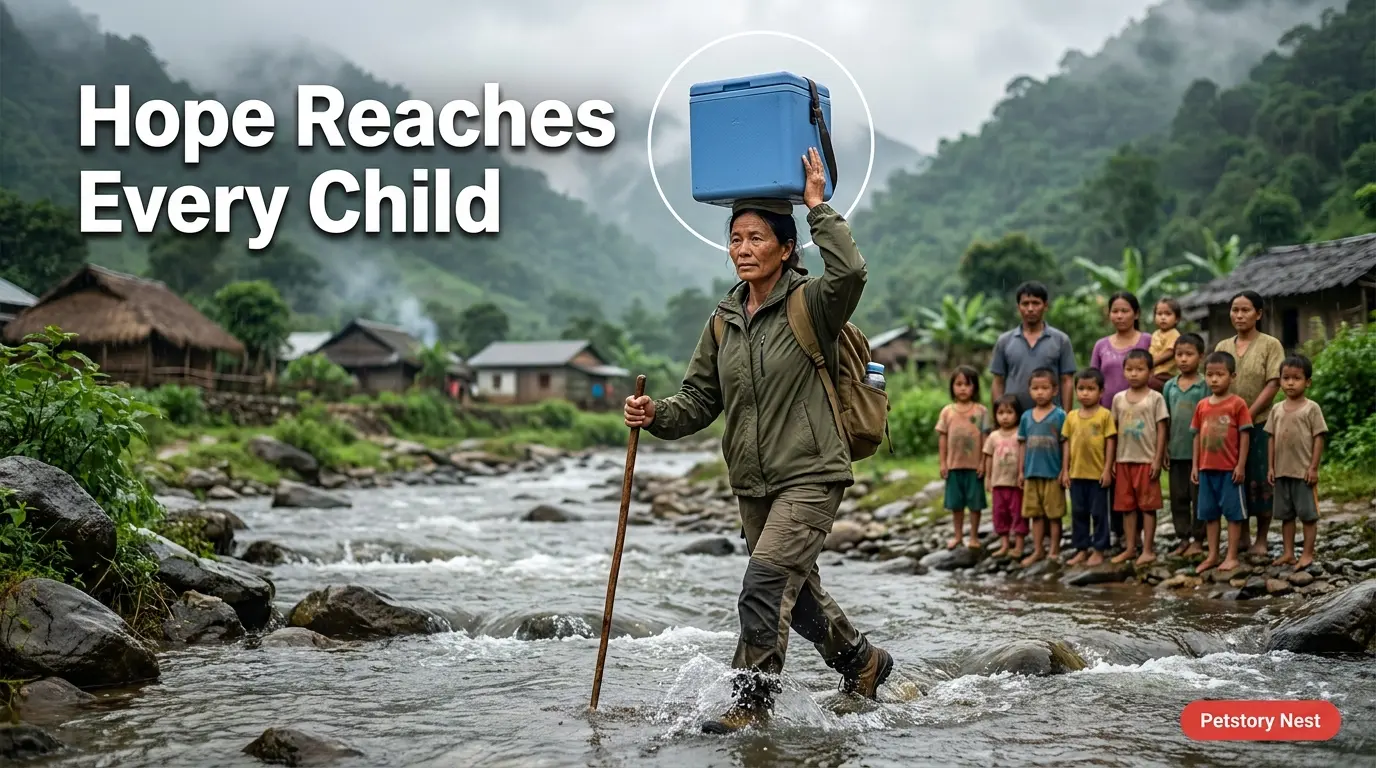
For most families, getting a child vaccinated is as simple as visiting a nearby clinic. But in some remote parts of the world, routine immunization depends on the extraordinary commitment of healthcare workers willing to travel through some of the most challenging terrain imaginable. One such story has captured widespread attention after a 50-year-old health worker walked 28 kilometers through dense forests and crossed five rivers to ensure 17 children in a remote village received life-saving polio vaccines.
Carrying a vaccine cold box on her head throughout the difficult journey, she overcame steep trails, flowing rivers, and isolated terrain to reach children who otherwise might have missed their scheduled immunizations. Her determination has inspired people around the world and highlighted the often-unseen efforts of frontline healthcare workers who protect vulnerable communities every day.
An Extraordinary Journey for a Routine Vaccine
The mission began long before sunrise as the experienced health worker prepared for a demanding day. Her destination was a remote village that could not be reached by road, making walking the only option.
The route covered nearly 28 kilometers, taking her through thick forests, muddy mountain paths, and across five rivers. Every step required careful attention, not only because of the challenging landscape but also because she was carrying a vaccine cold box that had to remain at a safe temperature throughout the journey.
Despite the physical demands, turning back was never an option. Seventeen children were waiting for their scheduled polio vaccinations, and missing the visit could leave them vulnerable to a preventable disease.
Why the Vaccine Cold Box Was So Important
One of the biggest challenges during the journey was protecting the vaccines themselves.
Polio vaccines must remain within a controlled temperature range from the moment they leave storage until they are administered. Healthcare workers use specially designed insulated cold boxes packed with ice packs to preserve the vaccines’ effectiveness.
Walking for hours through forests and rivers while carrying this equipment requires both strength and careful planning. A failure to maintain the cold chain could reduce the vaccines’ effectiveness, making the entire journey unsuccessful.
By safely transporting the vaccine carrier across difficult terrain, the health worker ensured every child received effective protection.
Understanding the Threat of Polio
Polio is a highly contagious viral disease that mainly affects young children. While many infected people experience only mild symptoms, the virus can attack the nervous system and, in severe cases, cause permanent paralysis.
Before vaccines became widely available, polio outbreaks affected communities across the world, leaving thousands of children with lifelong disabilities every year.
Global vaccination campaigns have dramatically reduced the number of cases over the past several decades, but health experts continue to stress that every child must be vaccinated to keep the virus from returning.
That is why reaching even the most isolated villages remains an essential part of public health efforts.
Healthcare Beyond the End of the Road
Many remote communities lack paved roads, bridges, or regular transportation. During rainy seasons, rivers become deeper, trails become slippery, and travel can become dangerous.
For healthcare workers serving these areas, long walks are often a normal part of the job.
Besides vaccinations, they provide prenatal care, monitor childhood nutrition, educate families about disease prevention, and help identify outbreaks before they spread.
Their work often receives little public attention despite having a profound impact on community health.
The Human Side of Public Health
Although vaccination programs are often discussed using statistics and medical reports, stories like this reveal the human dedication behind every successful campaign.
The 50-year-old health worker was not motivated by recognition or publicity. Her priority was ensuring that the children received protection against a disease that can be prevented through timely immunization.
Her journey demonstrates that public health depends not only on vaccines and medical technology but also on the determination of people willing to deliver them under difficult conditions.
Public Reaction to Her Dedication
After news of the journey spread online, people from around the world praised the health worker’s commitment.
Many described her as an example of true public service, while others said her determination reflected the sacrifices made by healthcare workers in underserved regions every day.
Medical professionals also noted that similar journeys take place regularly in remote communities across different countries, even though they rarely make international headlines.
For many readers, the story served as a reminder of the countless healthcare workers who quietly overcome enormous obstacles to care for others.
Global Progress Against Polio
The worldwide fight against polio has achieved remarkable success.
According to global health organizations, vaccination campaigns have reduced polio cases by more than 99 percent since the late twentieth century. This achievement has been made possible through years of coordinated immunization programs, community outreach, and dedicated healthcare workers.
Despite this progress, experts warn that vaccination efforts must continue. As long as the virus exists anywhere, children who remain unvaccinated continue to face potential risk.
This makes reaching remote villages just as important today as ever.
Why Stories Like This Matter
The story is about far more than one difficult walk through forests and rivers.
It highlights the challenges many healthcare workers face while delivering services that people in urban areas often take for granted. It also reminds us that behind every successful vaccination campaign are individuals who devote their time, energy, and courage to protecting others.
For the 17 children in the remote village, the health worker’s arrival meant more than receiving a routine vaccine—it represented access to healthcare despite geographical barriers.
A Powerful Reminder of Compassion and Commitment
In a world where negative headlines often dominate the news, stories of dedication and service offer a different perspective.
The health worker’s willingness to walk 28 kilometers and cross five rivers demonstrates how compassion can overcome even the most difficult obstacles.
Her determination shows that protecting children’s health is worth every challenge, regardless of distance or terrain.
Final Thoughts
The inspiring story of the 50-year-old health worker who walked 28 kilometers through forests and crossed five rivers to deliver life-saving polio vaccines is a powerful reminder of the extraordinary people working behind global immunization efforts.
Her journey ensured that 17 children in a remote village received protection from a preventable disease, proving that dedication and perseverance remain at the heart of public health. While vaccines are one of medicine’s greatest achievements, their success ultimately depends on frontline healthcare workers willing to go wherever they are needed.
Her remarkable mission has inspired people around the world and serves as a lasting example of how one person’s commitment can make a life-changing difference for an entire community.