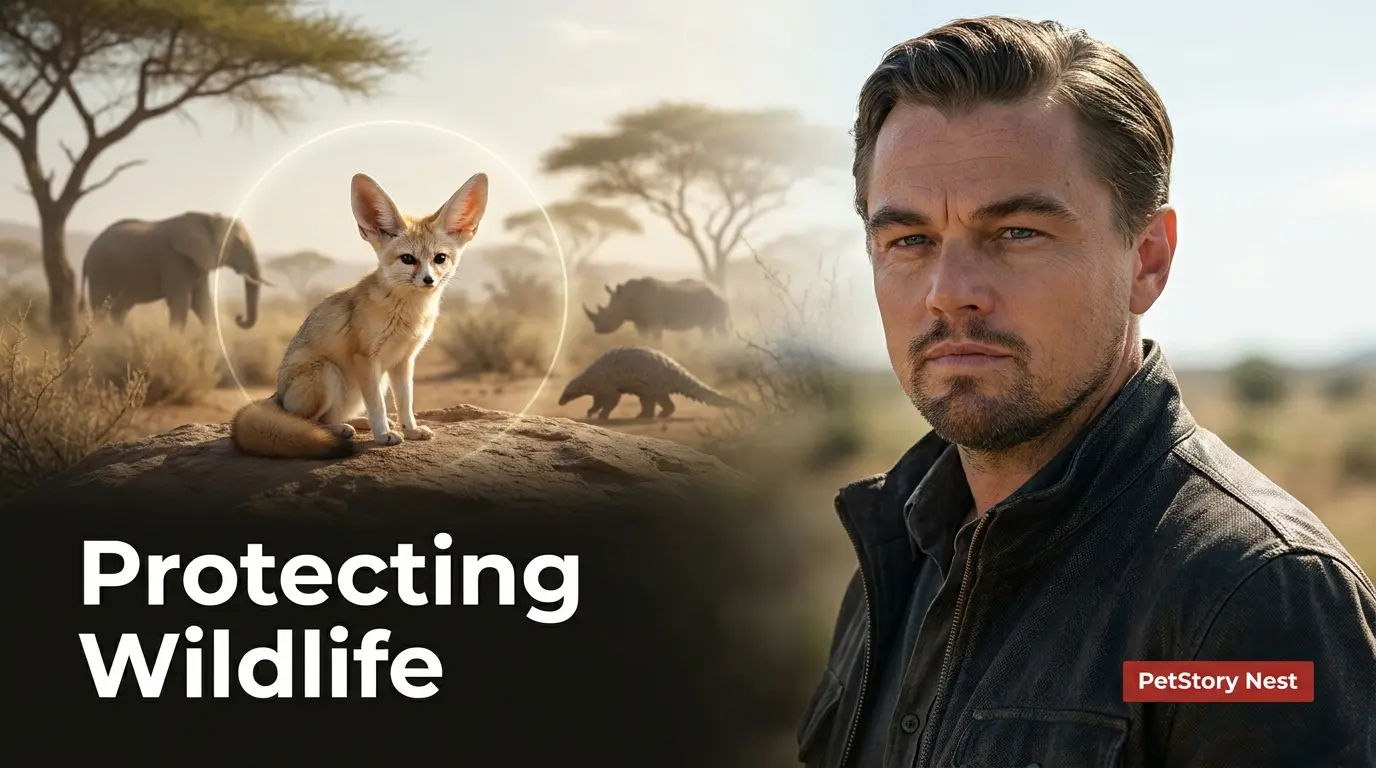
Hollywood star and longtime environmental advocate Leonardo DiCaprio has joined Jeff Bezos in launching a major new wildlife conservation initiative aimed at helping 100 of the world’s most critically endangered species.
The Phoenix Species Project begins with a $200 million philanthropic investment and is being led through DiCaprio’s environmental organization, Re:wild, and the Bezos Earth Fund. The project was announced in August 2026 and is focused specifically on species recovery rather than broad environmental funding.
The scale of the initiative has drawn international attention because it targets individual species facing an immediate risk of disappearing, while also supporting the habitats and communities connected to them.
A $200 Million Push to Prevent Extinction
The $200 million commitment is designed to support conservation work for 100 critically endangered species across 30 countries. Organizers describe the initiative as one of the largest philanthropic efforts dedicated specifically to species recovery.
Rather than using one approach for every species, conservation teams will develop recovery strategies based on local conditions. Planned work includes habitat restoration, breeding programs, disease management and efforts to control invasive species.
The project also emphasizes long-term conservation. That matters because protecting an endangered animal or plant often requires years of work rather than a single short-term intervention.
Which Endangered Species Are Being Targeted?
The list includes animals and plants facing very different threats in different parts of the world.
Among the species identified are the golden-crowned sifaka, a rare lemur from Madagascar; the Malayan pangolin; the pink land iguana of the Galápagos; and Attenborough’s long-beaked echidna, a highly unusual mammal found in New Guinea. The project also includes the Hickory Nut Gorge green salamander in North Carolina.
Other conservation targets span a wide range of wildlife and plant life. The initiative is intended to work across different habitats and taxonomic groups, recognizing that extinction threats can look very different from one species to another.
For some species, habitat destruction may be the biggest problem. Others can be threatened by invasive species, disease, illegal wildlife trade, hunting, climate-related changes or a combination of pressures.
Why DiCaprio Has Been Involved in Conservation for Years
The new project is another chapter in DiCaprio’s long history of environmental activism.
He established the Leonardo DiCaprio Foundation in 1998, supporting work involving biodiversity, wildlands, oceans and climate change. He later became involved with Re:wild, an organization focused on protecting and restoring wild places and biodiversity.
His environmental work has made wildlife conservation an important part of his public profile beyond his career in Hollywood.
According to the International Fund for Animal Welfare, DiCaprio has provided more than $100 million through his philanthropic efforts to environmental programs and projects. His advocacy has included wildlife conservation, biodiversity, marine protection and support for Indigenous communities.
The Phoenix Species Project therefore builds on an established conservation interest rather than representing a completely new direction for the actor.
Conservation Goes Beyond Saving Individual Animals
One of the central ideas behind the project is that saving a species often means protecting an entire ecosystem.
An endangered animal cannot necessarily recover simply because individuals are placed in protected facilities. Its food sources, breeding grounds, water supplies and natural habitat may all need to be protected at the same time.
That is why the project plans to involve Indigenous Peoples, local communities, scientists and conservation organizations. More than 100 partner organizations are expected to contribute to recovery plans tailored to individual species and locations.
This community-based approach is particularly important in regions where people live alongside threatened wildlife. Conservation efforts are more likely to succeed when local communities have a meaningful role in protecting the land and species around them.
A Different Approach to Wildlife Funding
Large conservation donations are not unusual, but the Phoenix Species Project is notable for concentrating its initial funding on a defined group of species.
The aim is not simply to slow population declines. The project is designed around species recovery, with the broader goal of bringing highly threatened wildlife back from the brink and improving the conditions that allow populations to survive in the wild.
That distinction could make the initiative important for conservation groups that have historically struggled to secure long-term funding for species that receive relatively little public attention.
A rare salamander, plant or small mammal may not attract the same attention as a tiger, elephant or panda, even though losing it can have consequences for its surrounding ecosystem.
What Happens Next?
The success of the Phoenix Species Project will ultimately depend on how effectively the money is translated into conservation results.
Funding can provide scientists and local organizations with resources for habitat restoration, monitoring, breeding programs and other recovery measures. But endangered species recovery can take years, and some populations face threats that cannot be solved by money alone.
The project is expected to work with conservation specialists and local partners to develop species-specific recovery plans and track progress over time.
For DiCaprio, the initiative also reinforces a message he has promoted for decades: protecting individual species is closely connected to protecting forests, rivers, oceans and other ecosystems.
A High-Profile Moment for Global Wildlife Conservation
The $200 million commitment puts some of the world’s least secure species in the international spotlight.
Whether every targeted population can ultimately recover remains to be seen, but the initiative represents a substantial new investment in wildlife conservation at a time when many species continue to face pressure from habitat loss and other environmental threats.
For the animals and plants included in the Phoenix Species Project, the significance of the funding may be measured not by headlines, but by whether populations begin to recover and remain viable in the wild for generations to come.