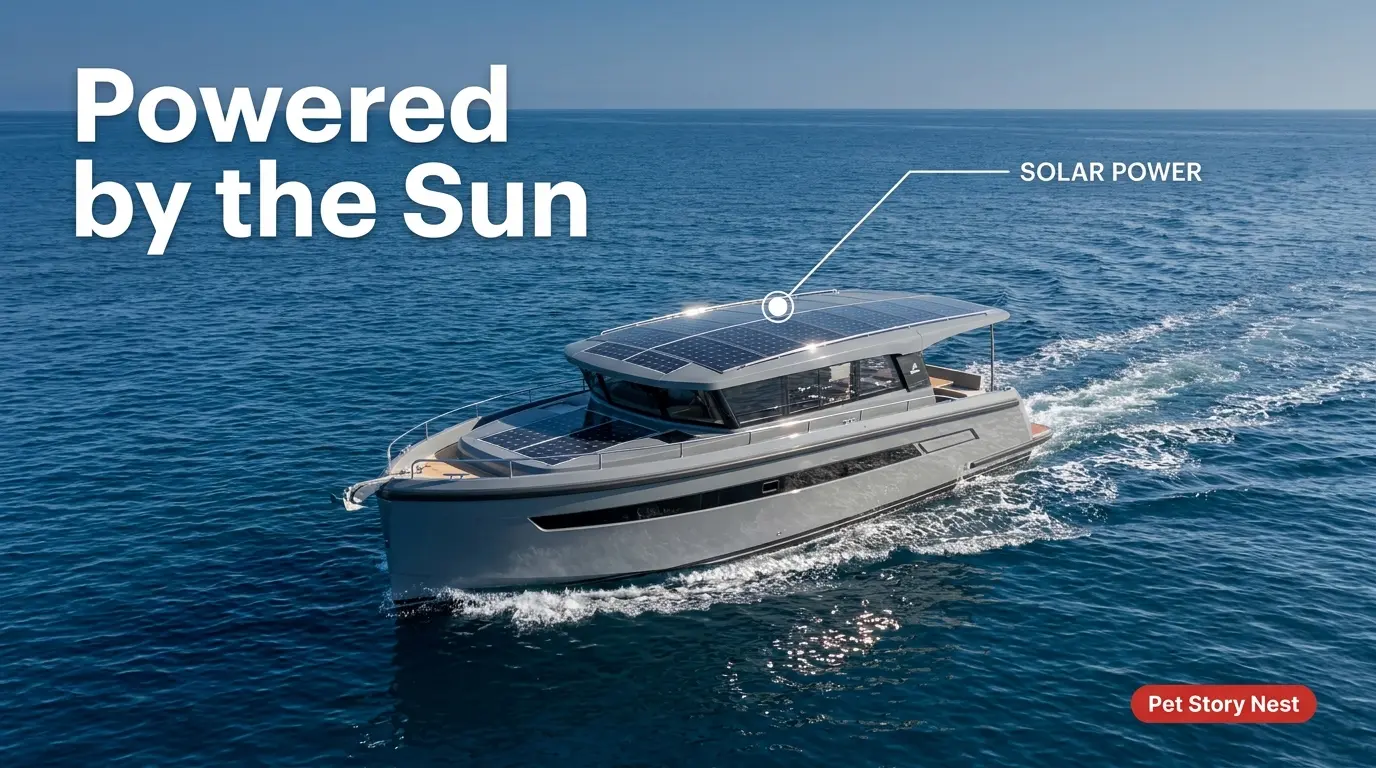
A Finnish boat builder has attracted attention after building an 11-meter solar-powered yacht from scratch and taking it on a voyage of more than 3,000 nautical miles without relying on conventional diesel or petrol propulsion. The project, developed by Lukas Sjöman, combines solar panels, batteries and electric propulsion in an effort to demonstrate what affordable renewable-powered boating can achieve.
The story is particularly striking because the vessel was reportedly built for about $20,000, making it a very different proposition from the expensive solar-electric yachts usually associated with marine technology. While the exact figure is sometimes reported as $20,724, the latest available report describes the construction cost more generally as approximately $20,000.
How the Solar-Powered Yacht Works
At the heart of Sjöman’s project is a straightforward idea: use sunlight to generate electricity, store that energy in batteries and use it to power the boat’s electric propulsion system.
Solar panels mounted on the vessel collect energy during daylight hours. Instead of sending that electricity directly to a conventional fuel engine, the system uses it to charge batteries that can then provide power for movement and other electrical requirements.
This approach is different from a typical hybrid yacht, where solar panels may supplement diesel engines or generators. In this case, the vessel was designed around renewable electricity as its primary source of propulsion, according to the report.
The system also demonstrates why efficiency is so important for electric boats. A vessel that consumes less energy to move can travel much farther using the same amount of stored electrical power.
More Than 3,000 Nautical Miles Without Conventional Fuel
The most eye-catching part of the project is the reported distance. Sjöman’s yacht traveled more than 3,000 nautical miles while relying on electricity generated through solar power rather than conventional fuel.
For perspective, 3,000 nautical miles is more than 5,500 kilometers. Covering that kind of distance by boat requires careful management of energy, weather conditions and propulsion efficiency.
The achievement does not mean that solar energy provides unlimited power under every condition. Solar generation naturally depends on available sunlight, while waves, wind, vessel speed and onboard electrical demands can all influence how much energy is required.
Instead, the project demonstrates how combining efficient electric propulsion with energy storage can make long-distance travel possible without the constant need to burn gasoline or diesel.
A Low-Cost Experiment in Clean Boating
Perhaps the most unusual part of the story is the project’s reported cost.
Large solar-powered and hybrid yachts can cost millions of dollars, placing them far beyond the reach of most individual boat owners. Sjöman’s project takes a different approach by focusing on a relatively low-cost, practical build.
The latest report says the yacht cost approximately $20,000 to construct. That figure is significant because it frames the vessel less as a luxury product and more as an engineering experiment designed to explore what can be achieved with accessible technology.
The reported $20,724 figure should therefore be treated carefully unless a detailed breakdown from the builder confirms that exact amount. The broader, independently reported figure is about $20,000.
Why Solar Power Is Interesting for Boats
Marine transportation presents a particularly interesting opportunity for renewable energy.
Boats operating far from shore can have limited access to charging infrastructure, and conventional fuel can represent a major part of operating costs. Solar panels offer a way to produce at least some electricity while a vessel is underway or stationary.
Solar power can also reduce dependence on fossil fuels and eliminate some of the emissions associated with combustion engines. Electric propulsion can provide another advantage: quieter operation compared with traditional marine engines.
However, solar boats face genuine technical limitations. Solar panels require adequate sunlight, and the amount of energy they can produce depends on their size, efficiency and weather conditions.
That makes battery storage equally important. Energy collected during bright periods needs to be stored efficiently so that the boat can continue operating when sunlight is weaker.
The Importance of Battery Storage
A solar-powered boat is not simply a vessel covered in photovoltaic panels.
The batteries are a crucial part of the system because they allow electricity generated during the day to be stored for later use. This becomes especially important when clouds reduce solar production or when the vessel needs more power than the panels can provide at a particular moment.
Electric propulsion also makes energy management central to the design. Reducing unnecessary weight, improving the hull’s efficiency and choosing an appropriate cruising speed can all help extend the usable range.
Sjöman’s project therefore represents more than a solar-panel installation. It is an example of how several technologies can work together to make renewable marine transportation more practical.
What the Project Could Mean for Future Boats
The Finnish yacht is not proof that every boat can immediately switch to solar power.
Large vessels, high-speed craft and ships operating in demanding conditions have much greater energy requirements. Their size can also limit how much solar-panel area is available relative to the power they need.
Smaller recreational boats, research vessels and specialized craft may have more opportunities to benefit from solar-electric systems. For these applications, lower energy consumption can make renewable propulsion considerably more practical.
The project also highlights an important trend in marine engineering: efficiency can sometimes be as important as generating more energy. A highly efficient vessel needs less electricity to travel the same distance, making a relatively modest solar system more useful.
A Different Vision for Sustainable Boating
Sjöman’s yacht offers an intriguing example of how renewable energy can be explored outside the world of expensive commercial prototypes.
An 11-meter vessel traveling more than 3,000 nautical miles using solar-generated electricity demonstrates the potential of combining solar panels, batteries and efficient electric propulsion in a carefully designed boat.
There are still practical challenges, including weather dependence, battery capacity, charging rates and the limitations of solar generation. But the project shows that sustainable marine transportation does not necessarily require an enormous budget or a futuristic laboratory.
For boat builders and renewable-energy enthusiasts, that may be the most interesting lesson of all: sometimes meaningful innovation begins with a relatively simple idea, a practical design and the willingness to test whether sunlight can take you farther than expected.