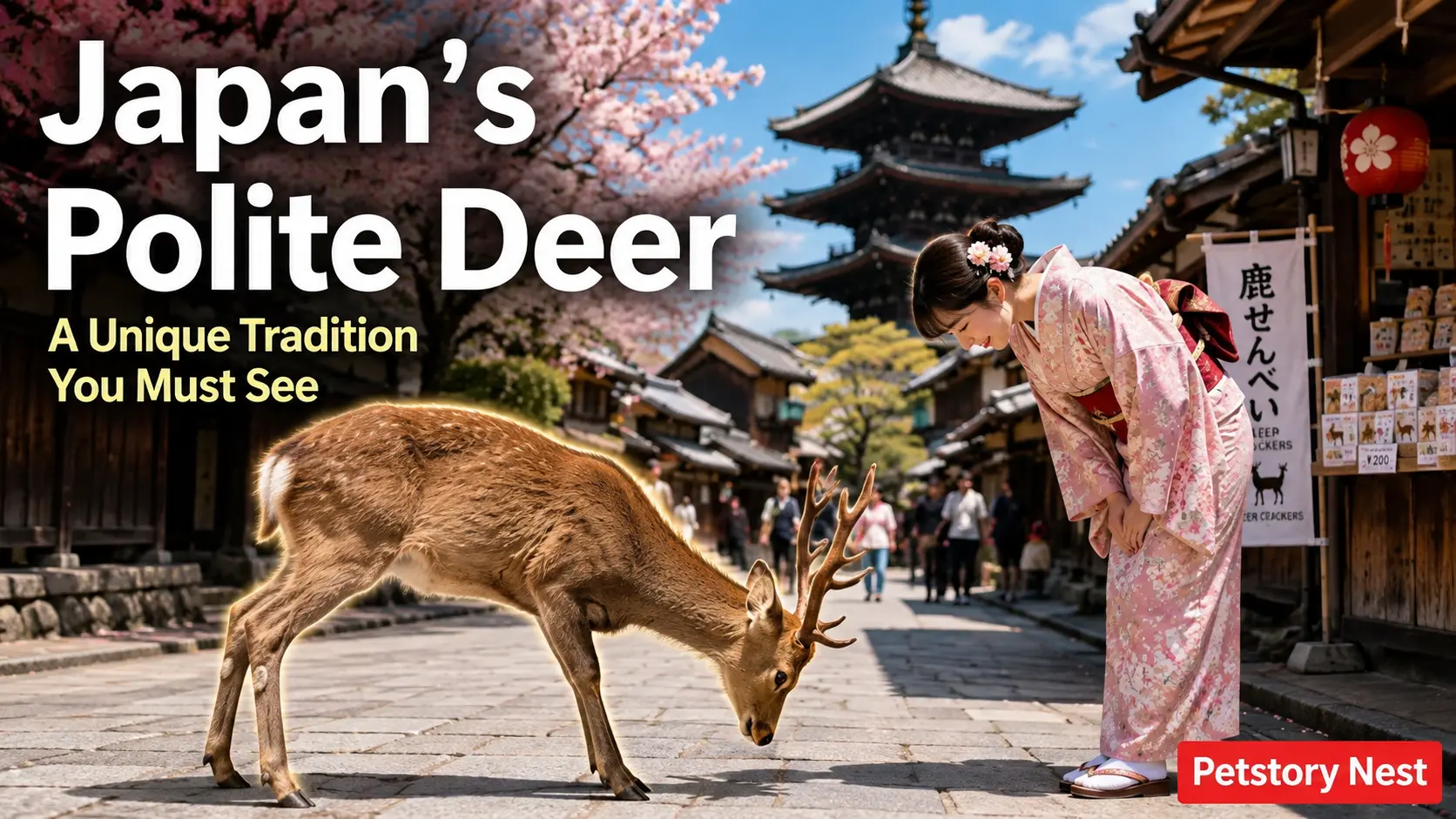
Japan is famous for its centuries-old temples, cherry blossoms, and rich cultural traditions. Yet one of its most unforgettable experiences doesn’t involve a historic monument or a festival—it involves wild deer that politely bow to visitors before accepting a treat.
In Nara Park, located in the historic city of Nara, thousands of free-roaming deer have become international attractions because of this unusual behavior. Tourists from around the world gather to witness the animals’ respectful bows, creating one of Japan’s most charming and photographed travel experiences. While the sight may seem almost magical, the explanation behind it is surprisingly practical.
Why Do the Deer Bow in Nara Park?
The famous bowing behavior is not something the deer are born knowing. Instead, wildlife experts believe the animals learned over time that bowing often results in receiving special deer crackers, known locally as shika senbei.
Visitors purchase these crackers from authorized vendors throughout Nara Park. After noticing that people often offered food in response to a bow, many deer began repeating the action. Over the years, the behavior spread among the local deer population, becoming a unique example of learned animal behavior.
Today, many deer will bow once—or even several times—before expecting a cracker from a visitor.
A Tradition Rooted in Culture
The relationship between Nara’s deer and local people goes back more than a thousand years.
According to Japanese tradition, deer were once believed to be sacred messengers of the gods associated with Kasuga Taisha Shrine, one of Nara’s most important Shinto shrines. Because of this belief, the animals have long been protected and respected.
Although they are now managed as wild animals rather than sacred beings, they remain an important cultural symbol of the city and continue to receive special protection.
Inside Nara Park: Home to More Than 1,000 Deer
Nara Park is one of Japan’s most popular tourist destinations, welcoming millions of visitors every year.
The spacious park is home to more than 1,000 wild sika deer that roam freely among temples, walking paths, gardens, and open lawns. Unlike animals kept in enclosures, these deer move naturally throughout the park, often interacting closely with visitors.
This peaceful coexistence between wildlife and people has become one of the park’s defining attractions.
How the Deer Learned This Behavior
Animal behavior specialists describe the bowing as a form of learned association rather than instinct.
The deer discovered that certain actions increased their chances of receiving food. When visitors rewarded polite-looking bows with crackers, the behavior became reinforced. Young deer likely observed older animals and gradually copied what worked.
This type of learning, known as observational learning and positive reinforcement, is common among intelligent animal species.
The Right Way to Interact With Nara’s Deer
Although the deer are friendly, they are still wild animals and should always be treated with respect.
Visitors are encouraged to purchase only the official deer crackers sold inside the park. Feeding the animals other foods is discouraged because it may be harmful to their health.
Experts also recommend remaining calm while feeding them. Once visitors run out of crackers, park staff often suggest showing empty hands to signal there is no more food available.
Respecting the animals helps maintain safe interactions for both visitors and wildlife.
Why Millions of Tourists Love the Experience
For many travelers, seeing a deer politely bow before accepting a treat becomes one of the highlights of visiting Japan.
Social media has also helped make the tradition famous. Videos showing visitors bowing back to the deer regularly attract millions of views, inspiring even more people to add Nara Park to their travel plans.
Unlike many tourist attractions, the experience feels personal. Every interaction is slightly different, making each visit memorable.
More Than a Tourist Attraction
The bowing deer represent something larger than an entertaining photo opportunity.
They reflect Japan’s long-standing appreciation for harmony between humans and nature. While the behavior itself developed through learning rather than ancient tradition, it has become a modern symbol of respectful interaction with wildlife.
The sight of people patiently greeting deer—and the deer seemingly returning the gesture—captures a spirit of mutual respect that resonates with visitors from around the world.
Protecting the Deer for Future Generations
As Nara continues to welcome large numbers of tourists, local authorities and conservation groups work to protect both the deer and their habitat.
Educational signs throughout the park remind visitors about responsible feeding, respectful behavior, and the importance of preserving the animals’ well-being. These efforts help ensure that the unique relationship between people and the deer remains sustainable.
Balancing tourism with wildlife conservation has become an essential part of preserving one of Japan’s most recognizable attractions.
A Simple Bow That Leaves a Lasting Impression
What begins as a simple exchange—a bow followed by a cracker—often becomes one of the most memorable moments of a trip to Japan.
The bowing deer of Nara Park demonstrate how animals can adapt through learning while also highlighting the country’s deep cultural respect for nature. Their gentle interactions with visitors continue to delight millions each year, turning an everyday feeding routine into one of Japan’s most heartwarming and iconic traditions.