Complete Article
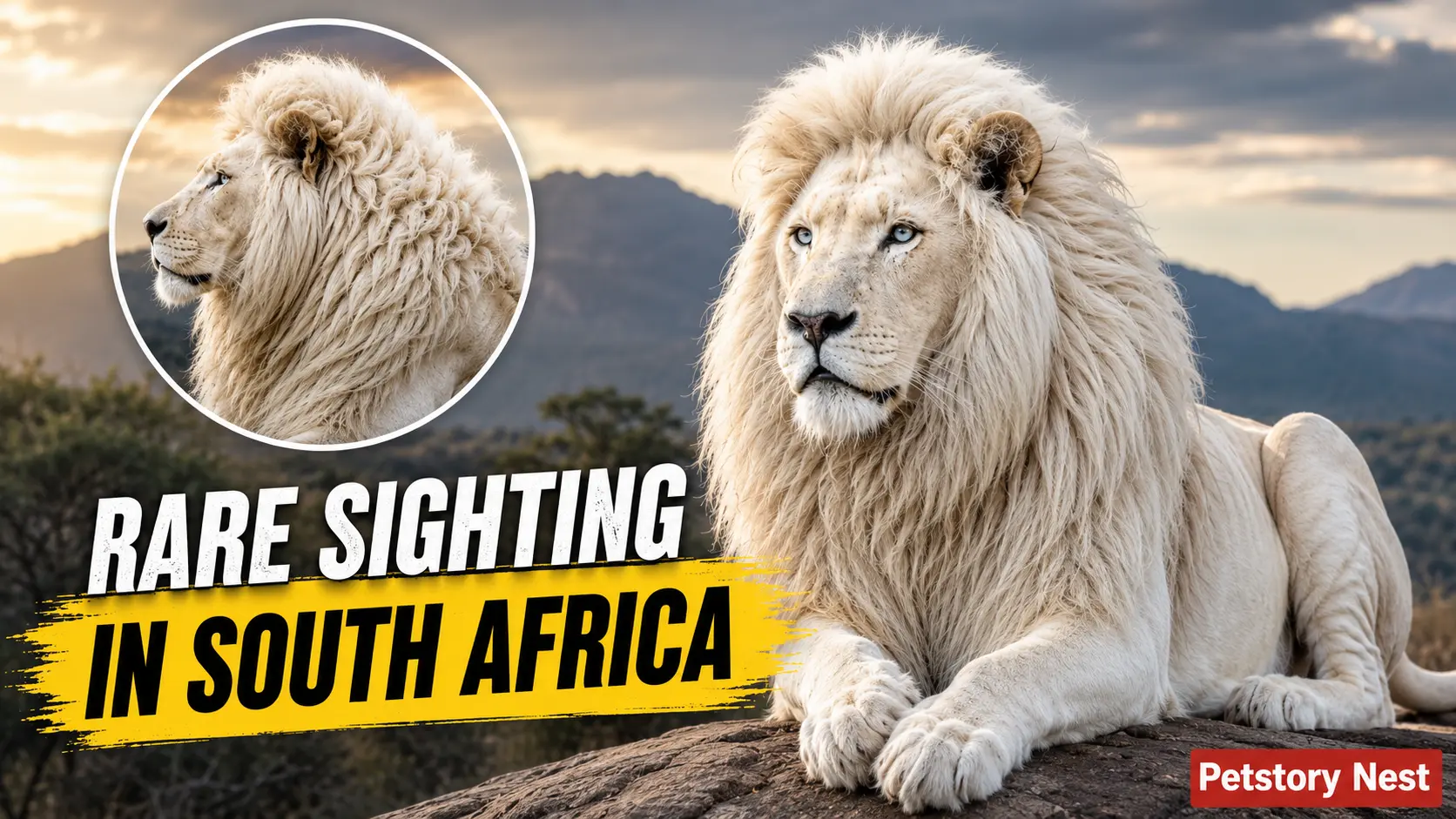
A rare white lion in South Africa has offered wildlife enthusiasts a remarkable glimpse of one of the country’s most unusual big cats. The animal’s pale coat and striking appearance make it stand out dramatically from the tawny lions normally seen across the African wilderness.
White lions are not a separate species or a form of albinism. Their unusual coloring is associated with a rare recessive genetic trait, commonly described as leucism, which reduces pigmentation while leaving the eyes normally pigmented.
For a wildlife photographer, encountering one in a natural setting can be an extraordinary experience. White lions are particularly associated with the Timbavati region of northeastern South Africa, an area connected ecologically with the greater Kruger landscape.
Why White Lions Are So Rare
The rarity of white lions begins with genetics. The trait responsible for their pale appearance is recessive, meaning the genetic combination needed to produce a white cub is uncommon in wild lion populations.
This is why a white lion can appear in a pride without every member having a white coat. Tawny lions can carry the relevant gene without displaying the distinctive coloring themselves. When the necessary genetic combination occurs, a cub can be born with the much lighter coat.
Scientists and conservation organizations have studied the trait for years. The Global White Lion Protection Trust says research helped identify the genetic marker associated with the animals’ unusual coloration, reinforcing that white lions are a genetic rarity rather than albino animals.
That distinction matters because albinism involves a different biological process. White lions generally retain normally pigmented eyes, while their pale appearance is linked to reduced pigmentation caused by their genetic makeup.
A Rare Sight in the South African Wilderness
The Timbavati region has long been associated with white lions. Historical records of white lions in the area date back to at least 1938, and the animals have become an important part of the region’s wildlife heritage.
Seeing one, however, is far from guaranteed.
Even in areas where white lions are known to occur, they live among vast natural landscapes where visibility can change quickly. Thick vegetation, changing weather, distance and the movements of lion prides all make wildlife photography unpredictable.
That is part of what makes a photograph of a white lion so compelling. A single clear image can capture an animal that many wildlife lovers may never have the opportunity to see in person.
Recent wildlife reports also continue to highlight white lions in the Timbavati area. In 2026, a white lion cub born in the region attracted attention as an unusually rare wild sighting, demonstrating that the genetic trait continues to appear naturally in the population.
The Difference Between a White Lion and an Albino Lion
One of the most common misconceptions about these animals is that they are albino lions.
They are not.
White lions are generally described as having leucistic or other genetically determined reduced pigmentation, rather than albinism. Their eyes can retain normal pigmentation, and their facial features remain those of an ordinary African lion.
Their coats can range from almost pure white to a softer cream color. In some individuals, the mane may also appear slightly darker or creamier than the rest of the body.
This subtle variation is one reason photographs of white lions can look different from one another. Lighting, age, coat condition and the surrounding landscape can all influence how pale an animal appears.
Why the Sighting Matters
The significance of a white lion sighting goes beyond its visual beauty.
White lions are part of the natural genetic diversity found within the African lion population. Their presence provides researchers and conservationists with an opportunity to study how rare traits persist within wild populations.
The animals are particularly associated with the Greater Timbavati and Kruger region. Conservation groups have worked to protect white lions and maintain genetic diversity, including programs that have helped return white lions to protected natural habitats.
At the same time, it is important not to confuse wild white lions with captive-bred animals. White lions are sometimes deliberately bred in captivity because of their unusual appearance, making it especially important to distinguish naturally occurring animals from those produced through controlled breeding.
A genuine wild sighting therefore carries a different conservation and scientific significance.
A Photograph That Captures Nature’s Unusual Side
Wildlife photography often depends on patience. Photographers can spend hours or even days searching for a particular animal, waiting for the right light, position and behavior.
A white lion adds another layer of rarity to that challenge.
Against the African landscape, its pale coat creates a striking contrast. The animal can appear almost surreal at first glance, yet its behavior, body structure and place within the pride remain those of a lion.
That combination of familiarity and rarity is what makes the image so powerful. It is instantly recognizable as a lion, but its unusual appearance invites viewers to stop and look more closely.
Protecting a Rare Part of South Africa’s Wildlife
The continued appearance of white lions in the wild also highlights the importance of protecting the ecosystems where they occur.
The Timbavati and neighboring Greater Kruger landscapes support lions alongside elephants, leopards, buffalo, rhinos and numerous other species. Maintaining connected, protected habitats gives wildlife greater room to move, reproduce and survive naturally.
The Global White Lion Protection Trust reports that white lions have been reintroduced into protected areas of their ancestral range and that several prides now roam freely there.
For conservationists, the goal is not simply to preserve an animal because it looks unusual. It is to protect the ecological systems and genetic diversity that allow naturally occurring wildlife to continue existing in the first place.
Why This White Lion Captured Attention
The photograph of a white lion in South Africa offers more than a beautiful wildlife moment. It provides a glimpse into the extraordinary genetic diversity that can exist within a familiar species.
White lions remain exceptionally uncommon in the wild, particularly when compared with the millions of images of ordinary tawny lions captured across Africa. Their presence in the Timbavati region continues to fascinate photographers, researchers and wildlife enthusiasts.
For viewers, the sighting is a reminder that even in a world where wildlife is photographed constantly, nature can still produce moments that feel genuinely extraordinary. A white lion moving through the South African wilderness is one of those moments—rare, striking and scientifically fascinating.