Complete Article
Few traditions in college football are as powerful as the Iowa Wave. Long before the final whistle or a game-winning touchdown, nearly 70,000 fans inside the University of Iowa’s Kinnick Stadium take part in a moment that has little to do with football and everything to do with compassion.
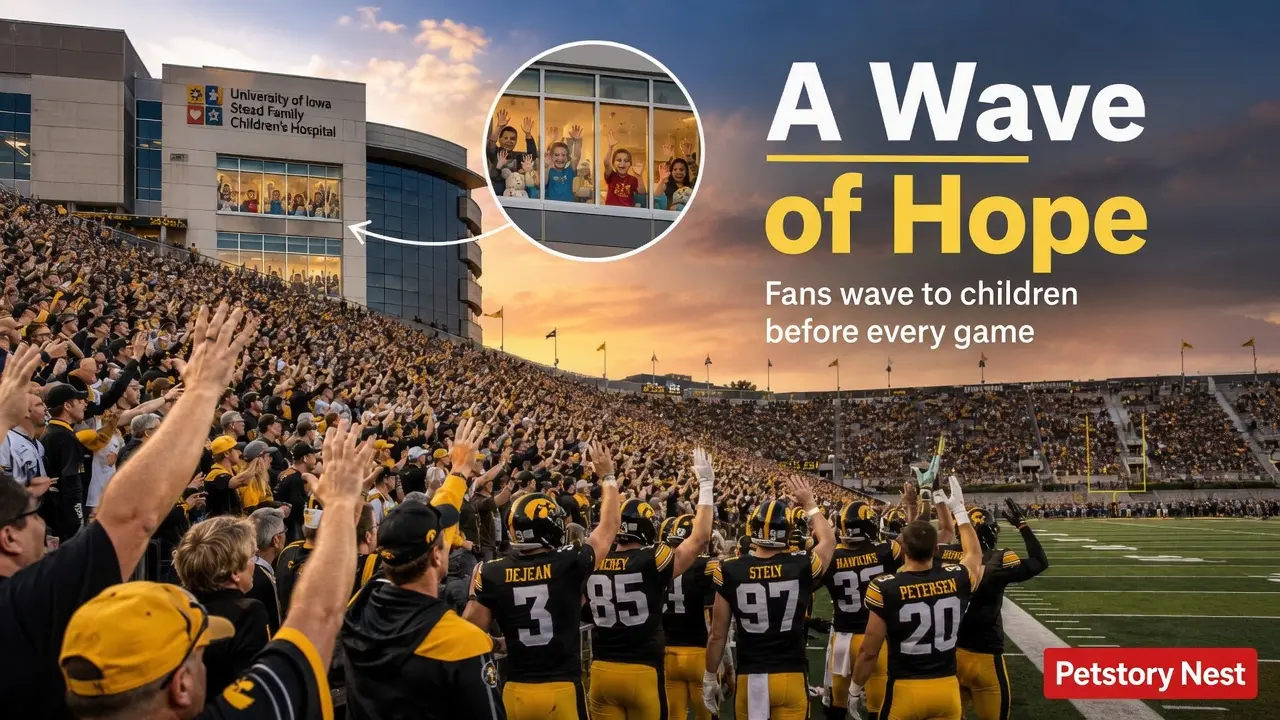
At the end of the first quarter of every home game, players, coaches, officials, and spectators stop what they’re doing, turn toward the nearby University of Iowa Stead Family Children’s Hospital, and wave to young patients watching from the hospital’s upper floors. For children facing some of life’s toughest medical battles, the gesture is a reminder that an entire stadium is cheering for them.
What began as a simple idea has grown into one of the most touching traditions in sports, inspiring millions around the world.
The Story Behind the Iowa Wave
The Iowa Wave first took place in 2017 after supporters suggested creating a meaningful connection between Kinnick Stadium and the newly opened University of Iowa Stead Family Children’s Hospital, which overlooks the football field.
Because many young patients can see the stadium from hospital windows and a dedicated viewing area, fans realized they had an opportunity to acknowledge the children during every home game.
The idea was wonderfully simple: pause after the first quarter and wave toward the hospital.
No elaborate ceremony was needed. The power of the tradition came from its sincerity.
A Moment Bigger Than Football
When the stadium announcer signals the end of the first quarter, the atmosphere changes instantly.
Thousands of fans rise to their feet. Players remove their helmets. Coaches stop focusing on strategy for a brief moment. Everyone turns toward the hospital’s upper floors.
Children wave back through the windows, often joined by parents, siblings, nurses, and hospital staff.
The emotional exchange lasts only a short time, but for many families, it becomes one of the most memorable moments of the day.
In a sport known for fierce competition and passionate rivalries, the Iowa Wave reminds everyone that kindness can unite people more powerfully than any scoreboard.
Why the Tradition Means So Much to Young Patients
Children staying at the University of Iowa Stead Family Children’s Hospital are often receiving treatment for serious illnesses or recovering from complex surgeries.
Hospital stays can be physically exhausting and emotionally challenging, especially for young patients who miss school, friends, and everyday life.
Watching tens of thousands of strangers wave directly to them creates an unforgettable experience.
Families have shared stories of children eagerly waiting for the first-quarter break, smiling as the stadium turns toward them. For some patients, it becomes a bright highlight during difficult weeks of treatment.
While a wave cannot replace medical care, it offers something equally valuable—hope, encouragement, and a reminder that they are not alone.
How the Iowa Wave Became a National Symbol of Sportsmanship
The Iowa Wave quickly gained national attention after videos of the tradition spread across television broadcasts and social media.
Sports fans praised the gesture for showing that athletics can bring communities together in meaningful ways beyond competition.
The tradition has received widespread recognition from sports organizations, broadcasters, and charitable groups for demonstrating compassion and community spirit.
Many visiting teams have also embraced the moment, happily joining Iowa players and fans in waving toward the hospital. Regardless of which team people support, everyone shares the same purpose during those few emotional seconds.
The Hospital’s Unique View of Kinnick Stadium
One reason the Iowa Wave is so special is the unique location of the University of Iowa Stead Family Children’s Hospital.
The hospital was intentionally designed with patient spaces overlooking Kinnick Stadium, allowing children to watch football games from inside the building.
Large viewing windows and gathering areas give patients an opportunity to enjoy the excitement of game day without leaving the hospital.
That architectural connection made the Iowa Wave possible and transformed the relationship between the stadium and the hospital into something truly extraordinary.
A Tradition That Inspires Beyond Iowa
The Iowa Wave has inspired conversations about how sports can positively impact local communities.
Rather than focusing only on wins and losses, the tradition highlights empathy, generosity, and human connection.
Fans across the country often point to the Iowa Wave as an example of the best qualities of college athletics. It demonstrates that a simple act of recognition can leave a lasting emotional impact on people facing incredibly difficult circumstances.
For many first-time visitors to Kinnick Stadium, the wave becomes the moment they remember most—not a spectacular play, but a shared expression of kindness.
Why the Iowa Wave Continues to Touch Hearts
Every football season brings new players, new fans, and new young patients watching from the hospital.
Although the faces change, the message remains constant.
For the children, the wave says they are seen, valued, and supported by an entire community. For fans, it serves as a reminder that life’s greatest victories are not always measured on a scoreboard.
The Iowa Wave has become much more than a college football tradition. It is a powerful symbol of hope, compassion, and unity that continues to inspire people around the world.
As thousands of hands rise toward the hospital after every first quarter, the message is unmistakable: no child fights alone when an entire stadium is cheering them on.