Complete Article
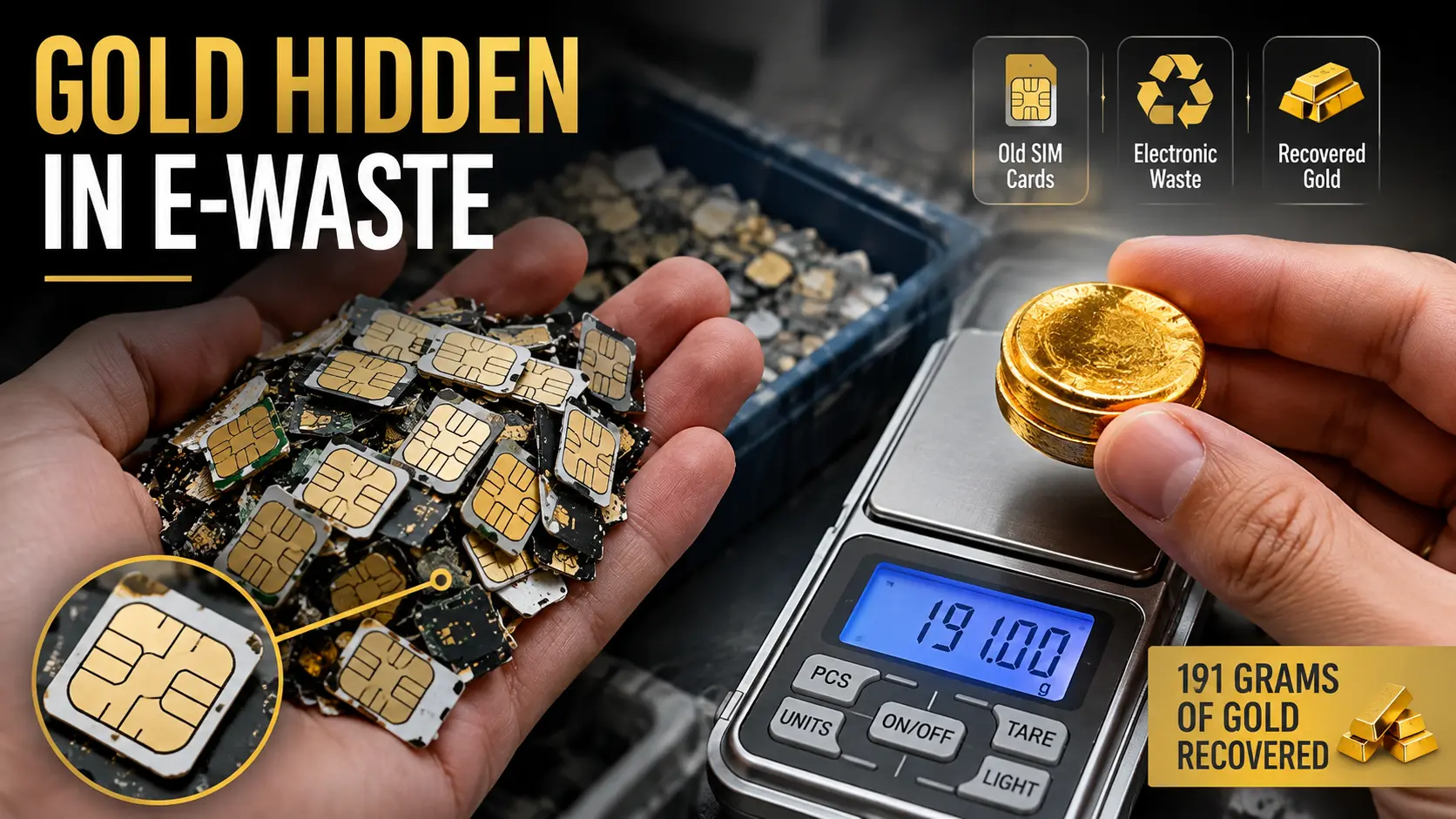
Most people think of old SIM cards as worthless pieces of plastic that end up forgotten in drawers or tossed into the trash. But a viral story claiming that a Chinese man recovered 191 grams of gold from discarded SIM cards and other electronic waste has changed that perception almost overnight. The report quickly spread across social media, inspiring countless people to search through old phones and storage boxes in hopes of finding hidden treasure.
While the story has reignited interest in electronic waste recycling, experts say it’s important to separate the fascinating facts from the online hype. Recovering gold from electronics is indeed possible, but the process is far more complex than many viral posts suggest.
Why This Story Went Viral
Stories about hidden wealth have always captured public attention, and this one combines two intriguing ideas: gold and everyday technology. The thought that old SIM cards sitting unused in a drawer could contain precious metal was enough to spark millions of views and discussions online.
Photos showing piles of discarded SIM cards next to a refined piece of gold only fueled curiosity. Many users began asking whether they should save their old SIM cards instead of throwing them away, while others wondered if electronic waste could become an unexpected source of income.
The story also highlights a growing awareness of the value hidden inside electronic devices that many people replace every few years.
Do SIM Cards Really Contain Gold?
Yes, they do—but not in the quantities many people imagine.
The gold-colored contact area on every SIM card contains a very thin layer of real gold. Manufacturers use gold because it is an excellent conductor of electricity and resists corrosion much better than many other metals. This helps ensure reliable communication between the SIM card and the phone over many years.
However, the amount of gold on a single SIM card is microscopic. Individually, these tiny pieces contain only a trace amount of the precious metal.
The same principle applies to many electronic devices. Computers, smartphones, tablets, and circuit boards all contain small amounts of gold and other valuable metals, but they are spread across numerous components.
How Gold Is Recovered From Electronic Waste
Recovering gold from electronic waste is a specialized industrial process.
Professional recycling facilities collect large quantities of discarded electronics before separating valuable components. The materials are then processed using advanced mechanical systems and carefully controlled chemical methods that isolate precious metals such as gold, silver, copper, and palladium.
These procedures require specialized equipment, trained workers, and strict environmental controls because some chemicals used during the extraction process can be hazardous if handled improperly.
This is one reason why experts discourage individuals from attempting to extract gold at home.
Understanding the 191-Gram Claim
The report that a Chinese man recovered 191 grams of gold has attracted enormous attention, but experts advise readers to view viral claims with caution.
While recovering gold from electronic waste is entirely possible, the amount reportedly obtained would almost certainly require processing a very large quantity of electronic materials rather than a handful of old SIM cards.
Many viral social media posts simplify complex recycling operations, making it appear as though only SIM cards were responsible for producing the gold. In reality, electronic recycling often involves many different types of components collected over long periods.
Without detailed information about the total volume of electronic waste processed, it is impossible to determine exactly how much gold came specifically from SIM cards.
Electronic Waste Is a Growing Global Challenge
The viral story also shines a spotlight on a much larger issue: electronic waste.
Every year, millions of tons of electronic devices are discarded worldwide. Smartphones, laptops, televisions, gaming consoles, printers, and countless other products eventually reach the end of their useful lives.
When these devices are thrown away instead of recycled, valuable materials are lost, and harmful substances may end up in landfills, creating environmental concerns.
Proper recycling allows manufacturers to recover valuable metals while reducing the need for new mining operations, which can have significant environmental impacts.
Why Gold Is Used in Electronics
Gold may be famous for jewelry and investment, but it also plays an important role in modern technology.
Unlike many other metals, gold does not rust or corrode easily. It conducts electricity exceptionally well and maintains reliable connections even after years of use.
These qualities make it ideal for tiny electrical contacts found in SIM cards, computer processors, connectors, and high-performance electronic equipment.
Although only tiny amounts are used in each device, those small quantities become valuable when millions of electronic products are recycled together.
Public Reaction Online
The report quickly generated widespread discussion across social media platforms.
Some users jokingly admitted they had already started searching old drawers filled with outdated phones and SIM cards. Others shared photos of their collections of unused electronics, wondering whether they might contain hidden value.
Technology enthusiasts welcomed the renewed attention on electronic recycling, saying it could encourage more people to dispose of old devices responsibly instead of throwing them into household trash.
At the same time, many experts reminded readers not to expect significant profits from a small number of old SIM cards.
Should You Save Your Old SIM Cards?
Keeping old SIM cards solely because of their gold content is unlikely to be financially rewarding.
The amount of gold in an individual SIM card is extremely small, making extraction impractical without industrial-scale processing. However, instead of throwing them away, consumers can contribute to responsible recycling by taking unwanted SIM cards and electronic devices to certified e-waste collection centers.
These facilities can safely recover reusable materials while protecting the environment from harmful electronic waste.
The Bigger Picture
Whether the reported recovery of 191 grams of gold can be independently verified or not, the story has achieved something important—it has reminded millions of people that electronic waste contains valuable resources.
Old SIM cards, smartphones, computers, and other electronic devices are more than just obsolete technology. They represent a growing source of recyclable materials that can help reduce waste, conserve natural resources, and support a more sustainable future.
The viral claim also serves as a useful reminder to approach sensational online stories with curiosity and caution. Recovering precious metals from electronics is real, but it requires specialized equipment, professional expertise, and large volumes of e-waste. Rather than expecting hidden riches from a few forgotten SIM cards, the greatest takeaway is the importance of responsible electronic recycling and the surprising value that can be found in materials many people overlook.