Complete Article
A woman who lost her nose after a rare illness has found an unusual but highly practical solution: removable prosthetic noses held in place with magnets. Jayne Hardman’s story has recently drawn renewed attention after she appeared on ITV’s This Morning, where she discussed how the prosthetics have helped her regain confidence and live more comfortably with a facial difference.
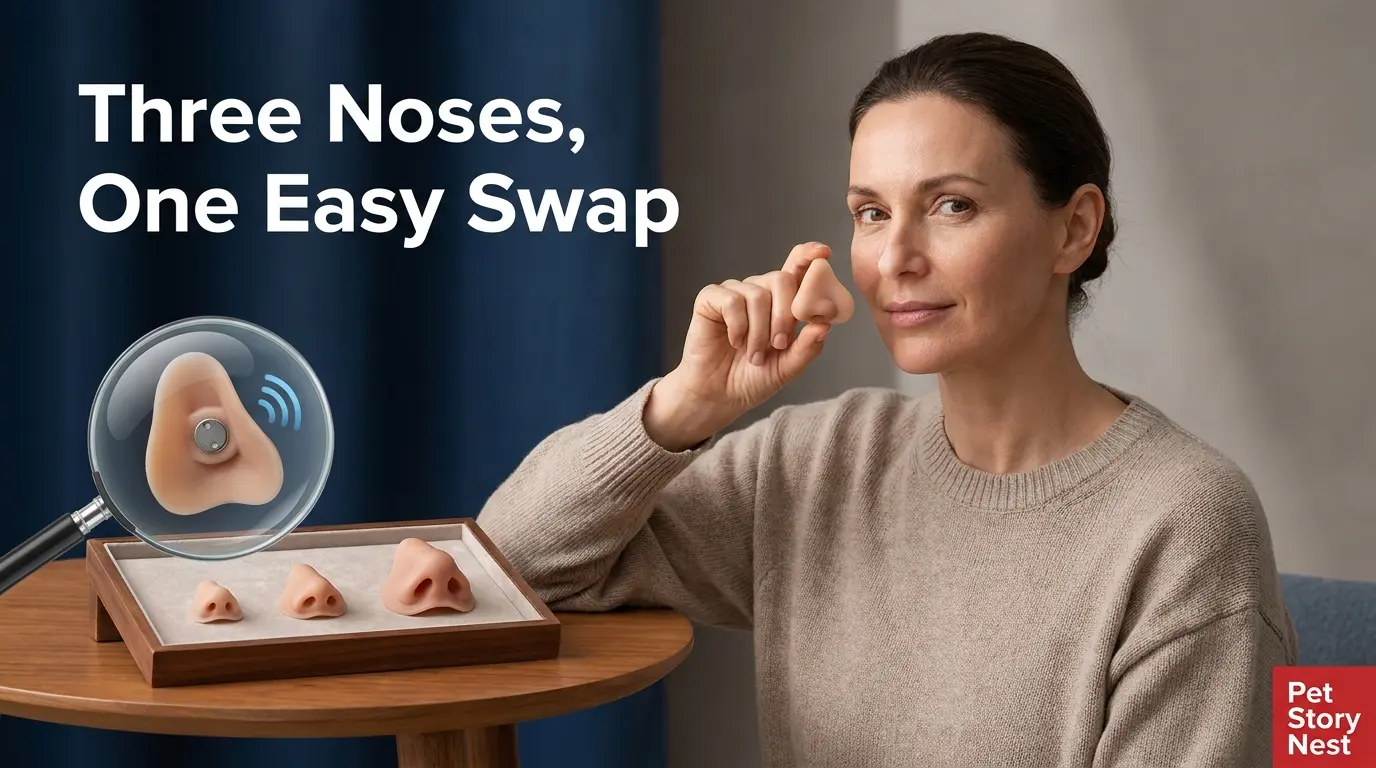
There is one important detail behind the viral description of her prosthetics. Hardman does not have three magnetic noses. She has three magnets fitted at the site where her natural nose was removed, while she has several interchangeable prosthetic noses. In 2025, she said she had seven noses at the last count.
How Jayne Hardman Lost Her Nose
Hardman’s journey began in 2012 after her dog accidentally knocked her nose. What initially appeared to be an injury eventually led doctors to discover that she had vasculitis, a condition involving inflammation and damage to blood vessels.
Over the following years, the condition severely affected her nose. According to ITV News, the disease caused a significant section of her nose to waste away, leaving Hardman struggling with her appearance and reluctant to go out in public.
By 2017, her nose had collapsed completely. Doctors ultimately told her that it could not be saved, and it was removed.
The physical change was only one part of the experience. Hardman has described the emotional impact of having a visible facial difference, including people staring and asking intrusive questions. She has also spoken about how difficult it became to face the outside world.
A Magnetic Prosthetic Changed Her Daily Life
Hardman was later fitted with a custom prosthetic nose by a specialist team at Queen Elizabeth Hospital in Birmingham. The prosthesis is held in place using magnets fitted around the surgical site, allowing her to put it on and remove it without needing to wear it permanently.
The concept is surprisingly simple.
Instead of having one permanently fixed artificial nose, Hardman can attach a prosthesis when she wants to go out and remove it when she goes to bed. She has explained that she does not sleep with the prosthetic and puts it on again in the morning.
The magnetic system also gives her something that many people might take for granted: the ability to make small choices about her appearance.
Why She Has Several Prosthetic Noses
One of the most interesting parts of Hardman’s story is her collection of different noses.
The Guardian reported in 2025 that she had seven different prosthetic noses at the time. They were not simply identical replacements. Some were made in slightly different shades to account for changes in her skin tone throughout the year.
That means her prosthetics can be selected according to the situation.
For example, Hardman explained that after drinking alcohol her face could become slightly flushed while her prosthetic nose remained its usual color. Her specialists subsequently created what she jokingly calls a “drunk nose,” with a pinker appearance.
She also keeps different options for changes in her complexion during warmer months.
The result is less like having a single medical device and more like having a small collection of personalized facial prosthetics.
The Technology Behind Magnetic Facial Prosthetics
Magnetic attachment is not unique to Hardman’s case. Facial prosthetics can be created for people who have lost or suffered damage to features such as the nose, ears or eyes.
Johns Hopkins Medicine explains that custom facial prosthetics can be created by trained anaplastologists, who specialize in restoring the appearance of missing or damaged body parts. Depending on the patient and the circumstances, prostheses can be attached using adhesives or magnetic systems.
Magnetic attachment can provide an important practical advantage because the prosthesis can be removed when necessary and then repositioned.
For Hardman, that flexibility has become part of everyday life.
She has even demonstrated the removable nature of her prosthetic publicly. Earlier television coverage showed her taking the nose off and putting it back on, surprising viewers who were unfamiliar with how facial prostheses can work.
From Self-Consciousness to Confidence
Perhaps the most significant part of Hardman’s story is not the unusual technology itself but what it has meant for her confidence.
When she was living without a nose, she said she found it difficult to go outside because people stared at her. After receiving the prosthetic, she described feeling able to face the world again. ITV reported in 2018 that Hardman said the change had transformed her life.
Her attitude toward the prosthetic has also evolved.
Rather than treating it as something embarrassing that must remain hidden, she has openly discussed it and used her experience to raise awareness of vasculitis and facial differences.
She has also worked with Vasculitis UK to share her experience with medical professionals and encourage greater awareness of the condition. The organization has highlighted her story as part of its media coverage of people living with vasculitis.
A Story About More Than Appearance
Hardman’s interchangeable prosthetic noses may initially seem like an unusual curiosity, but the story represents something much more meaningful.
Modern facial prosthetics can provide people with options after illness, surgery or serious injury. For someone living with a visible facial difference, being able to restore a familiar appearance can affect far more than photographs or first impressions. It can influence confidence, social interaction and the willingness to participate in everyday activities.
Hardman’s experience also challenges the idea that a prosthesis has to be hidden or treated solely as a medical necessity. Her different noses give her an element of personal choice, while the magnetic system makes changing them relatively straightforward.
Her story has resurfaced in 2026 after This Morning featured her experience again, describing how she now has several noses that attach with magnets.
For Hardman, the technology is ultimately about getting on with life.
What began as a devastating health problem has led to an unexpectedly empowering solution: a collection of carefully made prosthetic noses that allow her to choose how she looks, adapt to different circumstances and, most importantly, step outside with greater confidence.