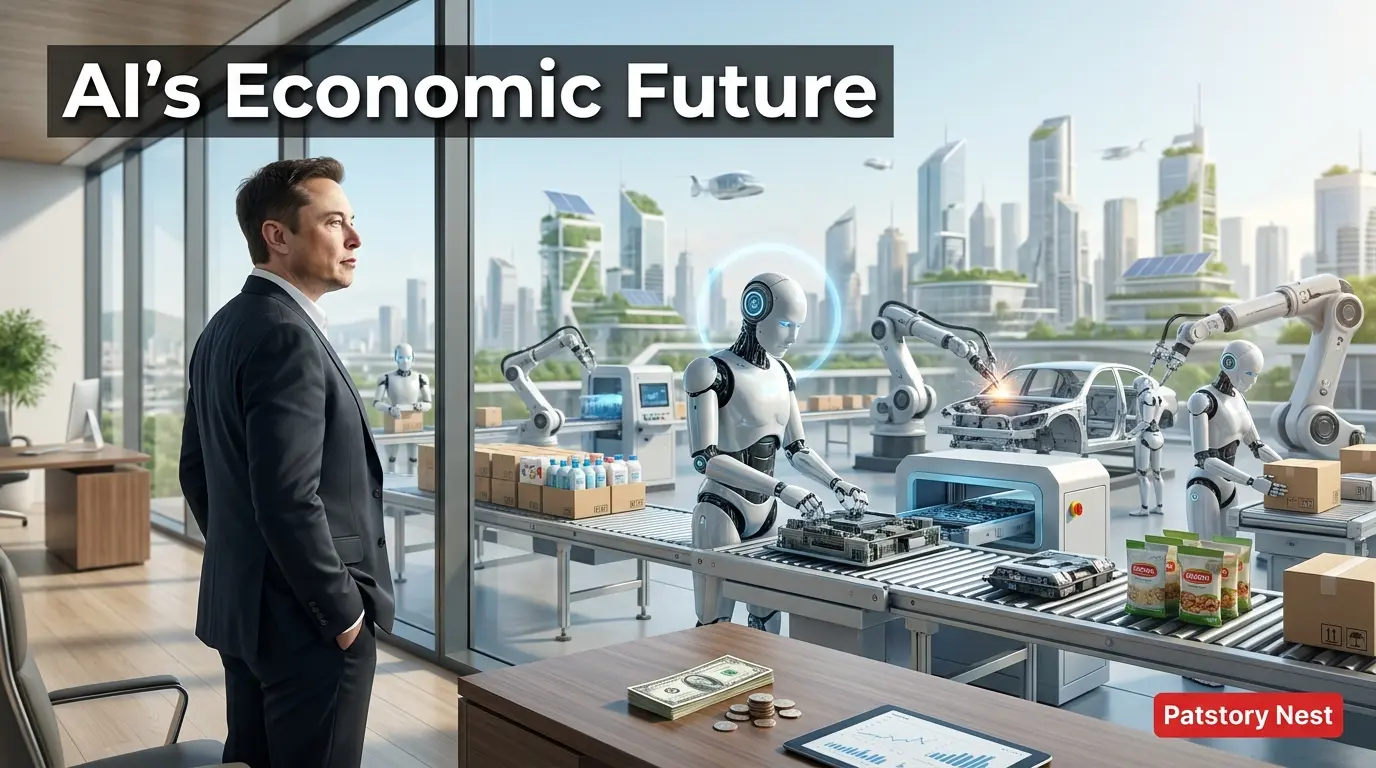
Imagine a world where robots build homes, prepare meals, manufacture products, and deliver nearly every service people need. According to Elon Musk, that future may not be as far away as many think. The billionaire entrepreneur believes rapid advances in artificial intelligence (AI) and robotics could dramatically reshape the global economy by 2036, potentially reducing the importance of money in everyday life.
While the idea sounds like science fiction, it reflects an ongoing debate among technology leaders, economists, and researchers about how AI could change work, wealth, and society. Musk’s comments are a prediction—not a confirmed outcome—but they have sparked conversations worldwide.
Why Elon Musk Thinks Money Could Become Less Important
Musk argues that as AI systems and robots become more capable, they could eventually produce more goods and services than humans could ever consume. If essential needs such as food, housing, transportation, and healthcare can be provided efficiently through automation, people may rely less on traditional income to access them.
In this scenario, abundance replaces scarcity. Rather than competing for limited resources, society could benefit from technology that makes everyday necessities more widely available at a much lower cost.
However, Musk has emphasized this as a possible future based on continued advances in AI, not as a certainty.
How Artificial Intelligence Is Already Changing Industries
Artificial intelligence is already transforming many industries around the world.
Factories increasingly use robotic systems to assemble products with speed and precision. AI software assists doctors in analyzing medical images, helps businesses automate customer service, and supports farmers in improving crop yields. Self-driving technology, smart logistics, and automated warehouses continue to evolve as well.
These developments demonstrate that automation is becoming a larger part of everyday life, although human workers still play a vital role in nearly every sector.
Could Automation Replace Most Human Work?
One of the biggest questions surrounding AI is whether machines will eventually perform most jobs.
Experts generally agree that automation will eliminate some tasks while creating new opportunities that require creativity, critical thinking, and human interaction. History shows that previous technological revolutions changed the job market rather than ending it altogether.
Still, AI is advancing much faster than many earlier technologies, leading some economists to believe governments and businesses may need to rethink education, workforce training, and social support systems.
Why Many Experts Remain Cautious
Although many researchers agree AI will continue transforming industries, they are more cautious about the idea that money will lose its importance.
Economic systems involve much more than producing goods. Property ownership, investment, international trade, taxation, public services, and wealth distribution all influence how societies function. Even if technology dramatically increases production, these systems would still need to adapt to ensure resources are shared fairly.
Many experts believe that public policy and government decisions will play just as important a role as technological progress.
The Bigger Challenge: Wealth Distribution
A future filled with highly productive AI raises another important question: Who benefits from the technology?
If only a small number of companies own advanced AI systems and robotic infrastructure, wealth could become even more concentrated. On the other hand, if automation leads to lower production costs and broader access to essential goods and services, more people could benefit from technological progress.
This issue has become a central topic in discussions about the future economy, with proposals ranging from expanded education programs to universal basic income and other policy solutions.
Public Reaction to Musk’s Prediction
Elon Musk’s prediction has generated widespread discussion across social media and technology communities.
Some people see his vision as an exciting future where humans are free to focus on creativity, family, education, and personal interests while machines handle repetitive work.
Others remain skeptical, arguing that economic systems are too complex for money to lose its value anytime soon. Critics also point to concerns about job displacement, regulation, cybersecurity, and the ethical use of artificial intelligence.
The mixed reactions highlight both the optimism and uncertainty surrounding the rapid development of AI.
What Could Happen by 2036?
No one can predict exactly what the world will look like by 2036.
Artificial intelligence is expected to become more capable, and automation will likely continue expanding across industries. Businesses may become more productive, and many routine tasks could increasingly be handled by intelligent machines.
Whether that ultimately changes the role of money depends on many factors beyond technology, including government policies, global economic conditions, consumer behavior, and how societies choose to manage the benefits of AI.
Final Thoughts
Elon Musk’s vision of a future where money becomes less important is one of the boldest predictions about artificial intelligence. It reflects growing confidence in the potential of AI and robotics to transform how goods and services are produced, but it remains a forecast rather than an established fact.
For now, AI is already reshaping industries and changing the way people work. Whether it eventually creates a world of abundance—or simply a more automated version of today’s economy—will depend not only on technological breakthroughs but also on the decisions governments, businesses, and societies make in the years ahead.